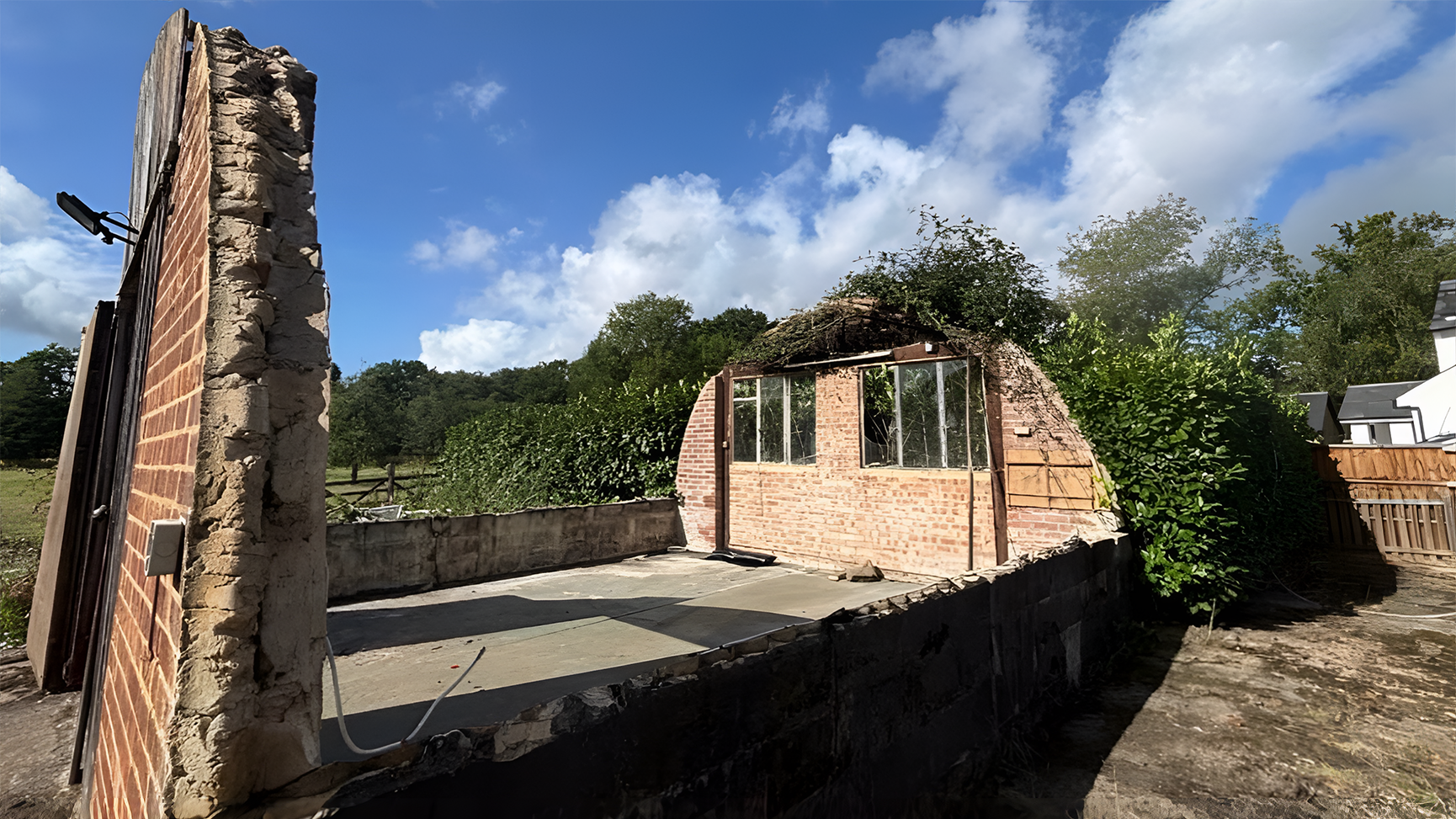
Asbestos cement sheets were used extensively for walls, soffits, cladding and fascias in UK buildings up to 1999. Our licensed team removes them safely — whether it's a small residential soffit or a large commercial cladding project.
Asbestos cement (AC) was one of the most widely used building materials in Britain from the 1950s through to the UK ban in 1999. It was mixed into corrugated roofing sheets, flat wall cladding panels, soffits, guttering, downpipes and flue pipes — used on everything from domestic garages and garden sheds to industrial warehouses and agricultural buildings. Because fibres are locked into the cement matrix, AC is classified as a "bound" material and carries a lower risk profile than friable asbestos types like insulating board or loose fill.
However, that lower risk only holds while the material is intact. Weathered, cracked or broken AC can release fibres — and any cutting, drilling or demolition work carried out without proper precautions is extremely dangerous. You cannot tell by sight alone whether a sheet contains asbestos; professional sampling and UKAS-accredited laboratory testing is the only reliable method of confirmation. If your property was built or had roofing or cladding installed before 1999, it should be treated as potentially containing asbestos until proven otherwise.
Corrugated AC sheets are the most common form found on domestic outbuildings. Widely used until 1999, they are present on millions of garages and sheds across the UK.
AC panels were used as exterior cladding on industrial buildings and some domestic properties. Often found on factory units and warehouse walls built before the 1990s.
AC guttering and rainwater pipes are frequently found on pre-1970s properties. They are easily overlooked during renovation works but must be handled as asbestos waste.
AC was used for soffit boards fitted under roof eaves. It is easily mistaken for standard cement board and is commonly disturbed during roofline replacement or repair works.
AC flue pipes were common in industrial and commercial heating systems through the 1980s. Often found alongside boiler plant or passing through ceiling voids in older buildings.
AC flat sheets were used as decking material on flat roofs and as floor boards in some outbuildings. Frequently found underneath later coverings, making identification difficult.
Experienced operatives who have removed asbestos cement from hundreds of residential and commercial properties across Surrey and London — we know what to look for and how to handle it safely.
UKAS-accredited laboratory sampling to definitively confirm asbestos content before any removal work begins. You get a clear, documented answer — not a best guess.
All work follows HSE CAR 2012 guidelines. Hazardous waste is treated, double-wrapped and disposed of at licensed facilities — full consignment notes provided on every job.
Clear quotes with no hidden costs and responsive communication throughout your project. We explain what we've found and what we're doing at every stage.
Straightforward, fixed-price quotes for most residential jobs. No surprises when the invoice arrives — the price you're quoted is the price you pay.
How do I know if my cement sheets contain asbestos?
You cannot tell by looking. Pre-1999 cement roofing, cladding or guttering should be treated as potentially containing asbestos. Professional sampling followed by UKAS-accredited laboratory analysis is the only way to confirm whether asbestos is present.
Is asbestos cement dangerous?
Asbestos cement is lower-risk than friable asbestos types because fibres are locked into the cement matrix. However, weathered, cracked or broken AC — and any cutting, drilling or demolition — can release dangerous fibres into the air. It should never be broken up without proper precautions.
Can I dispose of asbestos cement sheets myself?
No. Asbestos waste is classified as hazardous and must be transported and disposed of at a licensed hazardous waste facility with the correct documentation. Illegal disposal carries serious financial and criminal penalties.
How quickly can you remove it?
Most residential asbestos cement jobs — such as a single garage roof or soffit run — are completed in a single day. We'll confirm the exact timeline when we survey your property and provide a fixed-price quote.
Residential and commercial across Surrey and London. Fixed-price quotes, same-day removal available.