If your garage was built before 2000, there is a reasonable chance the roof is made from asbestos cement. It was one of the most widely used roofing materials in UK residential construction throughout the 1950s, 1960s, 1970s, and 1980s. Thousands of Surrey properties still have it today, and many homeowners have no idea.
This guide explains what asbestos cement garage roofs look like, how to identify one, and what to do if you think yours might be affected.
What Does an Asbestos Cement Garage Roof Look Like?
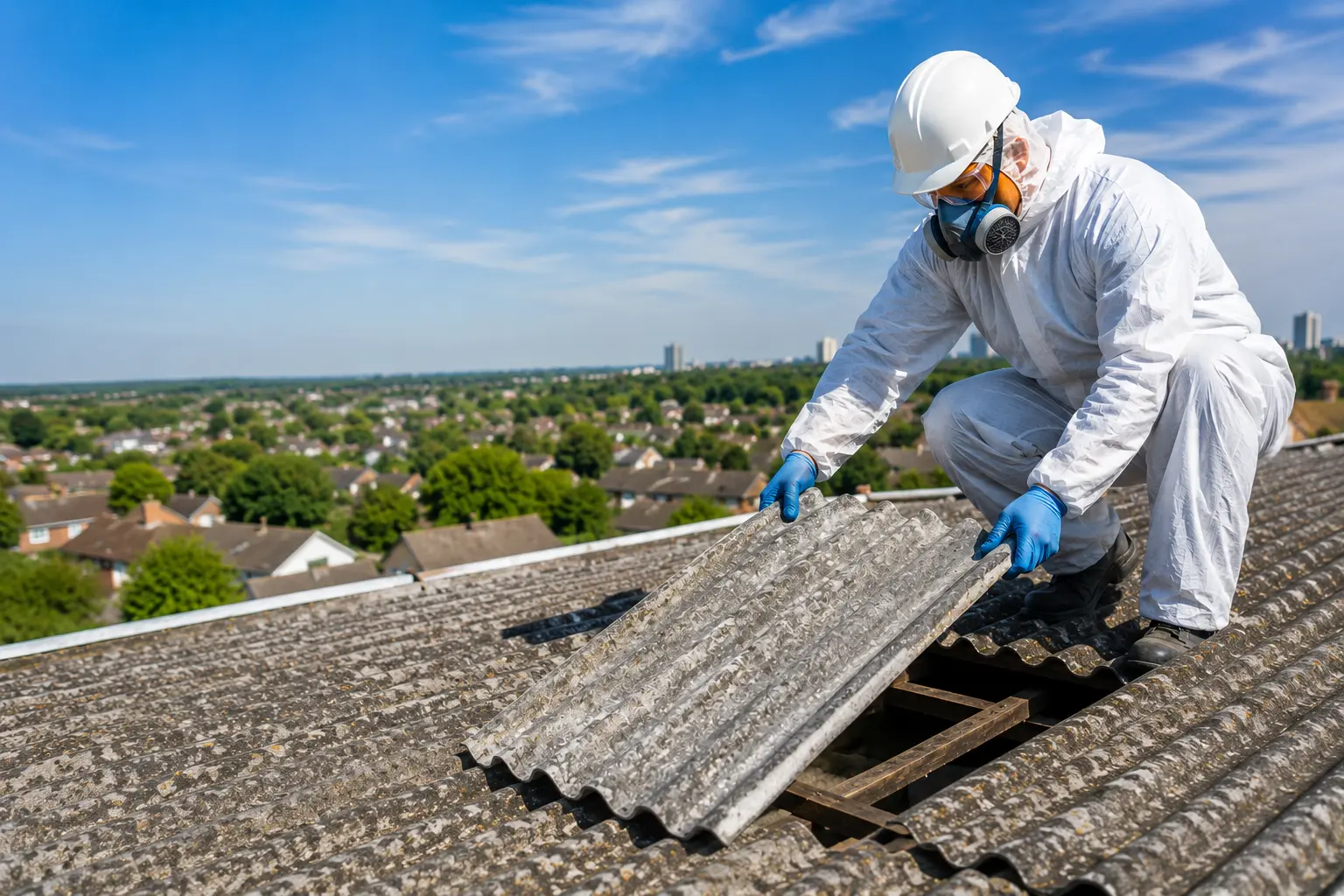
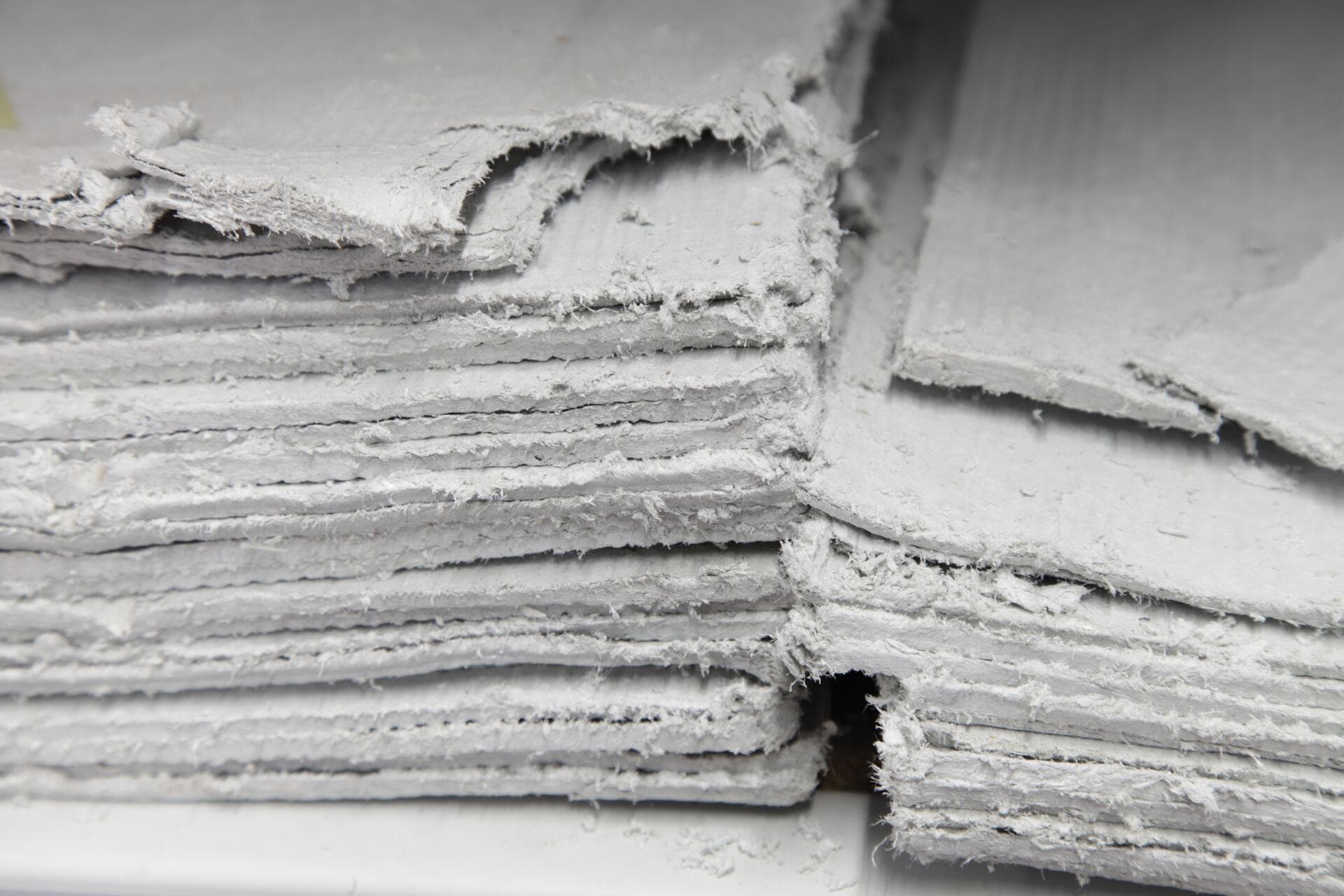
Asbestos cement roofing typically appears as corrugated grey sheets. The corrugated profile is the most recognisable feature, and older sheets may show signs of weathering, moss growth, staining, or surface crumbling.
If your garage roof looks like this and was built before 2000, it is worth treating it as a potential asbestos-containing material until confirmed otherwise.
Can I Tell Just by Looking at It?
Not definitively. Visual inspection alone cannot confirm whether a material contains asbestos. The fibres are microscopic and entirely invisible to the naked eye. What you are looking for are the physical characteristics of the material – the corrugated profile, the grey colour, the age of the structure – rather than the asbestos itself.
Many homeowners assume that because the roof looks intact or in reasonable condition, it is safe to leave alone or remove themselves. Condition and safety are two separate things. An intact asbestos cement roof carries a lower immediate risk than a damaged one, but it still requires professional assessment and controlled removal.
How Old Is Your Garage?
The single most useful piece of information is the age of the structure. If your garage was built or re-roofed before 2000, asbestos cement is a realistic possibility. If it was built or re-roofed after 1999, when asbestos was banned in the UK, it is unlikely to contain asbestos.
If you are unsure when your garage was built, look at the age of the surrounding property. Garages built at the same time as the house are a reasonable guide. If the house was built before 2000, the garage almost certainly was too.
What Happens If the Roof Is Damaged?
A garage roof in good condition – intact sheets, no cracking, no visible fragmentation – carries a lower immediate risk. The concern arises when the material begins to degrade. Over time, exposure to weather, frost, and moss growth causes the cement matrix to weaken and become brittle. At this point, the surface can begin to shed fibres even without disturbance.
A visibly crumbling, cracked, or fragmented asbestos cement roof is a more urgent situation. Fibres can be released at roofline level above the property, and the risk of further fragmentation during any attempt at removal is significantly higher.
If your garage roof is damaged, do not attempt to clean it, repair it, or remove it yourself.
What Should You Do?
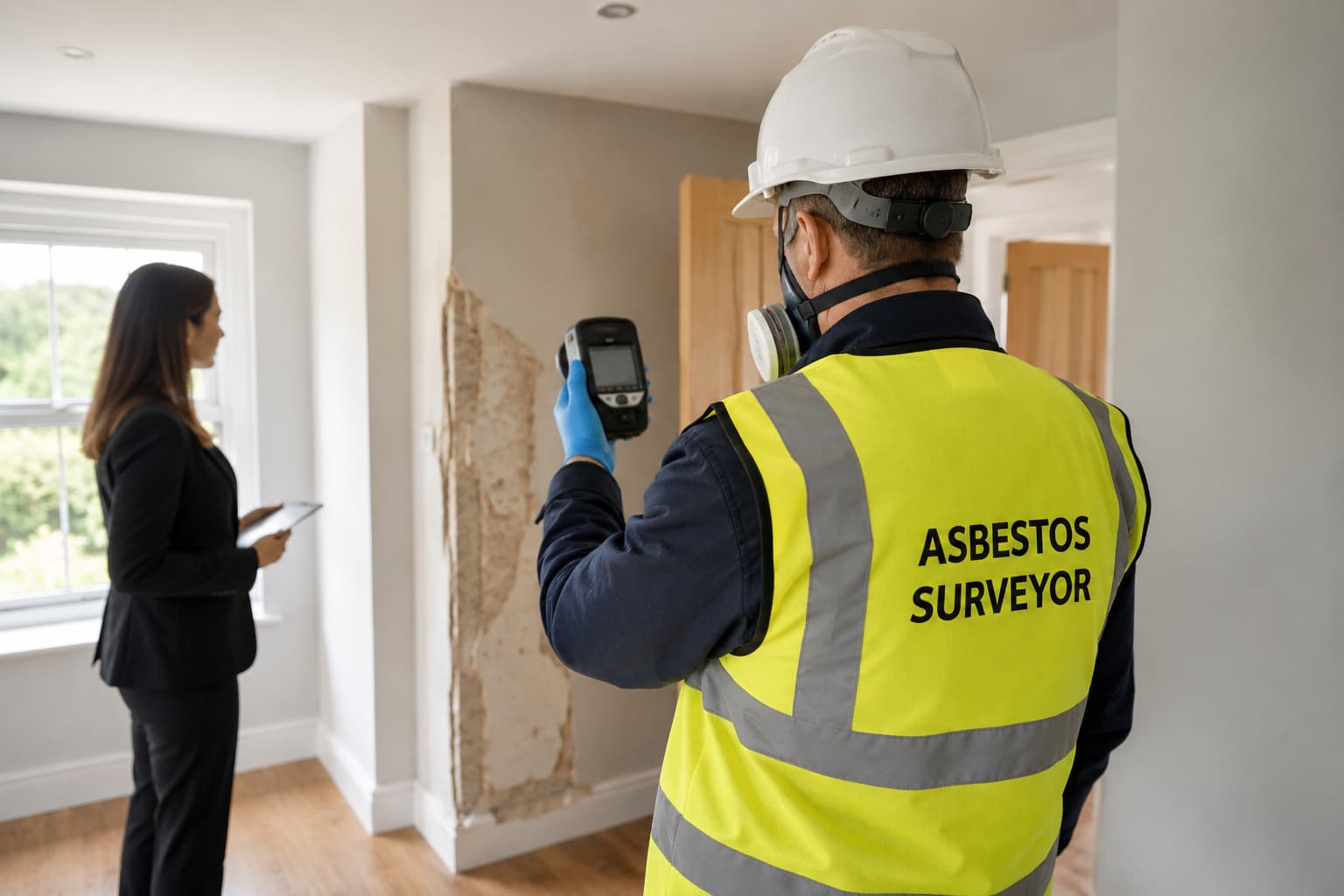
The correct first step is a professional survey. A UKATA-trained operative will inspect the roof, assess its condition, and confirm whether the material contains asbestos. If removal is required, you will receive a plain-English written report and a fixed written quote within 48 hours of the survey.
At Surrey Environmental Services, we carry out free same-week surveys across Surrey and South West London. There is no charge for the visit and no obligation to proceed. If asbestos is confirmed and you choose to go ahead, our UKATA-trained team removes the sheets whole wherever possible, disposes of all waste at an HSE-approved licensed facility, and provides a consignment note on completion.
If you have an older garage and you are unsure about the roof, the safest thing you can do is have it assessed before anyone goes near it.
Explore the latest asbestos news, homeowner guidance and expert advice to help you make informed decisions about asbestos safety.